Why Subscription Cancellation Rarely Means Immediate Deauthorization
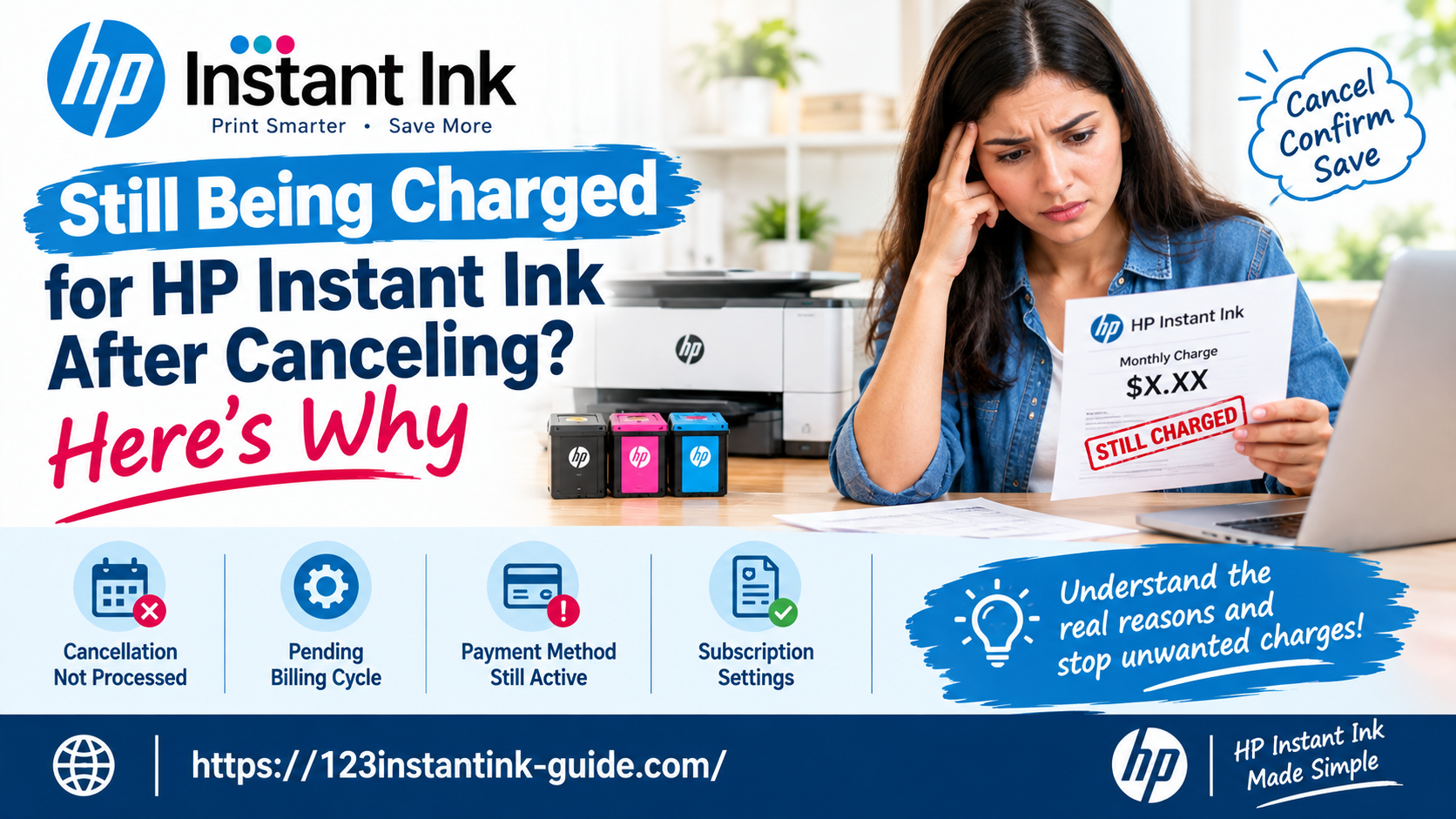
I want to look at a pattern that shows up across basically every subscription-based product, using HP Instant Ink billing as the concrete example, because it's a source of constant user confusion that traces back to a design decision most people never think about explicitly.
Cancellation is an intent, not an instant state change
When someone hits "cancel" on a subscription, the mental model most users have is: this stops now. That's rarely how it's actually implemented. What "cancel" really does, in almost every subscription system I've looked at, is set a flag that says "do not renew at the next billing boundary" — it doesn't retroactively unwind the period you're currently in, and it usually doesn't immediately revoke access either.
This is a deliberate and reasonable design choice from the provider's side: you paid for a billing period, you get to use what you paid for through the end of it. But it creates a specific class of user confusion, because the user's intent (stop this now) and the system's actual behavior (stop this at the next boundary) are subtly different things that get described with the same word — "canceled."
Why this produces the exact "I'm still being charged" complaint pattern
Once you see cancellation as "sets a future-non-renewal flag" rather than "immediate termination," the common complaint makes complete sense: a charge that was already scheduled or already in-flight when the cancellation flag got set will still process, because canceling doesn't reach backward in time to unschedule something already committed. From the user's side, this looks exactly like "I canceled and got charged anyway" — which reads as a bug, but is actually the system behaving exactly as designed, just not as the user expected.
The confusion is compounded by billing cycle boundaries rarely aligning with intuitive dates. If you signed up on the 14th, your cycle boundary is the 14th of each month, not the 1st — so canceling on the 20th doesn't feel like it should generate another charge, but it does, because you're still 6 days into the current cycle when you cancel.
The failure mode that's actually a bug, versus the one that isn't
It's worth distinguishing two genuinely different situations that get reported identically by users:
Expected behavior: a charge processes for the current cycle because cancellation only affects future renewal, not the period already in progress. This is working as intended.
Actual failure: the cancellation request itself didn't complete — a form submission error, a sync failure between the frontend and the billing backend, a race condition where a scheduled charge job ran before the cancellation flag was fully committed. This is a genuine bug, and the account will still show as active weeks later if you check.
The diagnostic distinction is straightforward once you know to look for it: check whether the account status actually reflects "canceled" after the fact. If it does, and you were still charged for the cycle you were in when you canceled, that's case 1 — expected. If it doesn't show as canceled at all, that's case 2 — a genuine failure worth pursuing as a support issue.
Why users rarely make this distinction themselves
Most billing UIs don't clearly surface "your cancellation is scheduled to take effect on [date]" versus "your access has ended" as separate, explicit states. They tend to just show "canceled" as a binary flag, which collapses the actually-relevant information (when does billing actually stop, and did the flag get set correctly) into something the user has to reconstruct by comparing charge dates against their own memory of when they clicked the button.
The general pattern
This is really a state-machine transparency problem: users are reasoning about a system with an implicit state machine (active → pending-cancellation → canceled) as if it were a simple boolean (subscribed / not subscribed), because the UI doesn't expose the intermediate state clearly. Any system with this shape — cancellation with a delayed effective date, a grace period, a pending state — will generate the exact same "I already canceled, why was I charged" support pattern, regardless of the specific product, because the mismatch is between the user's mental model and the actual state machine, not a bug in any individual instance.
If you're trying to work out which category your own situation falls into — expected end-of-cycle billing versus a cancellation that genuinely didn't process — checking your account's actual current status against your charge history is the fastest way to tell, and 123InstantInk Guide walks through that distinction in more practical detail if you want a step-by-step version.